Hayman Island sits in the Whitsundays, a tropical region off the central Queensland coast. The island enjoys warm temperatures year-round, but conditions vary enough between seasons that choosing the right month can make a meaningful difference to your experience.
This guide breaks down Hayman Island weather month by month, drawing on Bureau of Meteorology data, so you can plan around the best conditions for snorkelling, sailing, outdoor dining and general comfort.
Hayman Island Weather Overview
The Whitsundays have two broad seasons:
- Dry season (May to October): Warm days, cool evenings, minimal rain and low humidity. This is peak tourism season for good reason.
- Wet season (November to April): Hot, humid days with afternoon storms. Higher rainfall, warmer water temperatures and marine stinger season from November to May.
Average annual temperature range: 19°C (winter nights) to 31°C (summer days). Water temperatures range from 22°C in July to 29°C in February.
Month-by-Month Weather Guide
January
- Air temperature: 25 to 31°C
- Water temperature: 28 to 29°C
- Rainfall: High (average 250mm)
- Best for: All travellers (lower rates despite school holidays), turtle spotting on nearby beaches
- Note: Stinger suits required for ocean swimming. Most water activities still operate.
February
- Air temperature: 25 to 31°C
- Water temperature: 28 to 29°C
- Rainfall: Highest month (average 280mm)
- Best for: Couples comfortable with tropical conditions, for guests who want the quietest period and lowest rates
- Note: Typically the least popular month, meaning excellent availability and value on packages.
March
- Air temperature: 24 to 30°C
- Water temperature: 27 to 28°C
- Rainfall: Moderate to high (average 220mm)
- Best for: Travellers seeking lower prices before Easter.
April
- Air temperature: 23 to 29°C
- Water temperature: 26 to 27°C
- Rainfall: Moderate (average 120mm)
- Best for: Shoulder season value. Comfortable conditions with some school holiday crowds. Humidity drops noticeably.
May
- Air temperature: 21 to 27°C
- Water temperature: 24 to 25°C
- Rainfall: Low (average 70mm)
- Best for: Couples. Reef visibility improves rapidly. Humpback whale migration begins late May.
June
- Air temperature: 19 to 25°C
- Water temperature: 23 to 24°C
- Rainfall: Low (average 45mm)
- Best for: Snorkelling, sailing, outdoor dining. One of the best months overall. Read: Why winter is the best time to visit →
July
- Air temperature: 18 to 25°C
- Water temperature: 22 to 23°C
- Rainfall: Lowest month (average 30mm)
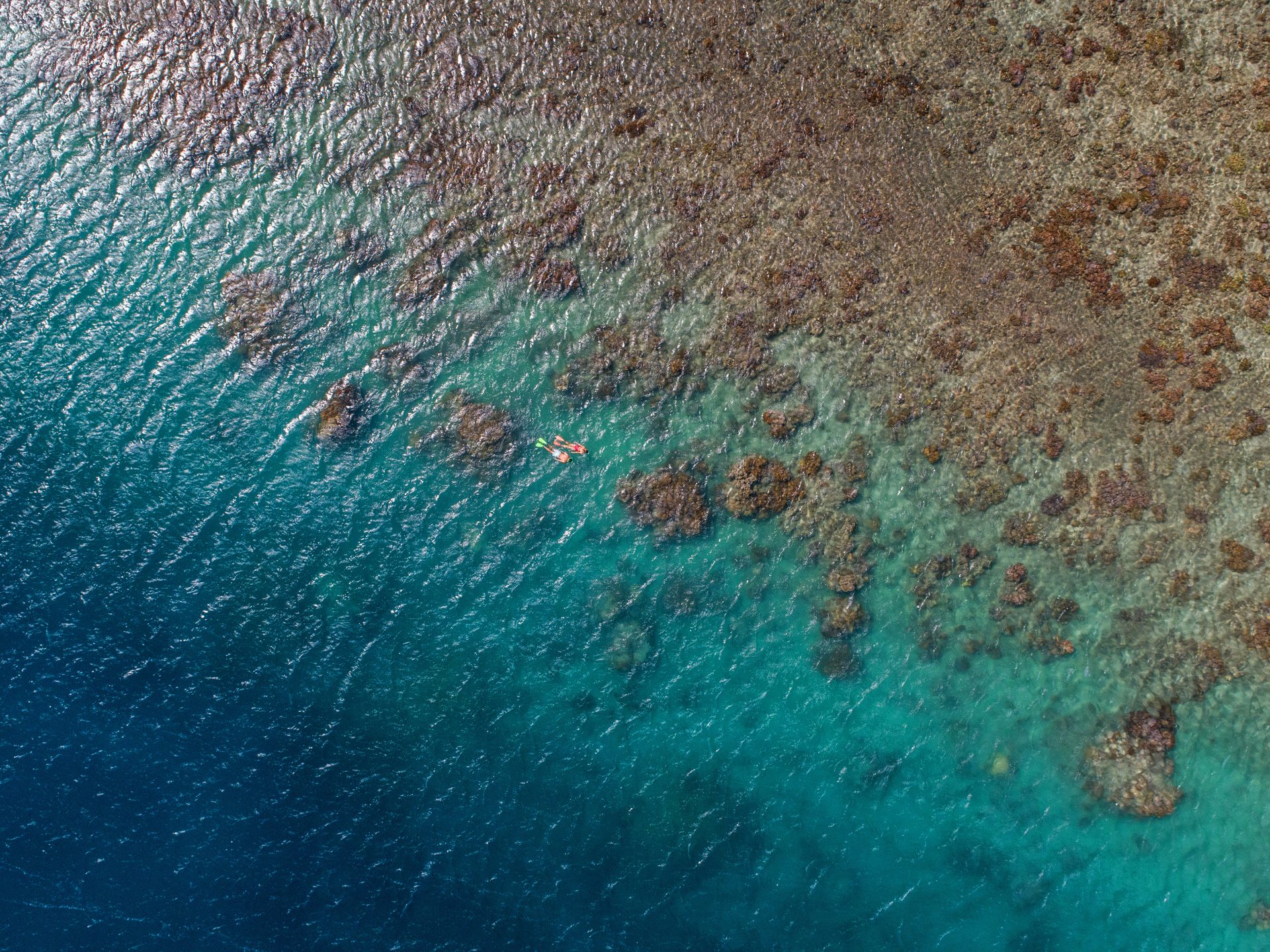
- Best for: Families (Queensland school holidays), diving and snorkelling (best visibility of the year), humpback whale watching
- Note: Book well ahead.
August
- Air temperature: 19 to 26°C
- Water temperature: 22 to 23°C
- Rainfall: Very low (average 35mm)
- Best for: All travellers. Outstanding conditions across the board. Less crowded than July once school holidays end. Peak whale watching.
September
- Air temperature: 20 to 27°C
- Water temperature: 23 to 24°C
- Rainfall: Low (average 35mm)
- Best for: Couples. Warming water makes extended snorkelling at Blue Pearl Bay more comfortable. Last reliable dry-season month.
October
- Air temperature: 22 to 29°C
- Water temperature: 25 to 26°C
- Rainfall: Moderate (average 55mm)
- Best for: All travellers although note stinger season begins (stinger suits recommended).
November
- Air temperature: 24 to 30°C
- Water temperature: 27 to 28°C
- Rainfall: Moderate to high (average 120mm)
- Best for: Couples. Package rates are at their lowest before December holiday demand.
December
- Air temperature: 25 to 31°C
- Water temperature: 28 to 29°C
- Rainfall: High (average 180mm)
- Best for: Families on school holidays who prefer warm water and are comfortable with stinger suits. Turtle nesting season begins on nearby beaches.
Weather Comparison Table
| Month | Avg High | Water Temp | Rain (mm) | Humidity | Best For |
| Jan | 31°C | 29°C | 250 | High | Turtle season, value |
| Feb | 31°C | 29°C | 280 | High | Quietest month, lowest rates |
| Mar | 30°C | 28°C | 220 | High | Pre-Easter value |
| Apr | 29°C | 27°C | 120 | Medium | Shoulder season |
| May | 27°C | 25°C | 70 | Low | Whale season starts |
| Jun | 25°C | 24°C | 45 | Low | Snorkelling, sailing |
| Jul | 25°C | 23°C | 30 | Low | Families, best visibility |
| Aug | 26°C | 23°C | 35 | Low | All travellers, whale watching |
| Sep | 27°C | 24°C | 35 | Low | Couples, warming water |
| Oct | 29°C | 26°C | 55 | Medium | Value, warm swims |
| Nov | 30°C | 28°C | 120 | High | Couples |
| Dec | 31°C | 29°C | 180 | High | Families on holidays |
What to Pack for Each Season
Dry season (May to October):
- Swimwear and reef-safe sunscreen (UV is strong year-round in the Whitsundays)
- Light layers for evenings: a linen shirt, light cardigan or cotton jumper
- Rashie or thin wetsuit for extended snorkelling in 22°C water
- Hat and sunglasses
- Smart casual for evening dining at Pacific
- Reef shoes for low-tide walks and rocky beach sections
Wet season (November to April):
- All of the above, plus a light rain jacket
- Stinger suit (the resort provides these, but bringing your own ensures a better fit)
- Insect repellent for humid evenings
- Quick-dry clothing
You will not need heavy winter clothing at any time of year. Think mild Sydney autumn, not Melbourne winter.
Frequently Asked Questions
What is the best time of year to visit Hayman Island?
June to September is the consensus best window according to Bureau of Meteorology data. You get dry weather, comfortable temperatures (18 to 27°C), minimal humidity, calm seas and the best reef snorkelling visibility of the year. July is the single best month for conditions, though it is also the busiest due to school holidays. August offers similar conditions with fewer crowds. Explore the destination →
What is the worst time to visit Hayman Island?
February is the least favourable month for weather: highest rainfall, peak humidity and the greatest (though still low) cyclone risk. That said, Hayman Island is visitable year-round. Rain events are typically short afternoon storms lasting 30 to 60 minutes rather than all-day downpours. The resort operates at full capacity even in wet season.
It doesn’t stop you from relaxing though. Enjoy the offerings at the Spa by indulging in beauty and massage treatments. Available to book as on island experience.
Is Hayman Island warm enough to swim in winter?
Yes. Water temperatures in the Whitsundays range from 22 to 23°C in June through August. That is comparable to Sydney’s ocean temperature in January. Most visitors find it comfortable for extended swimming and snorkelling. The resort’s heated pools are also available year-round.
Does it rain a lot on Hayman Island?
During dry season (May to October), rainfall is minimal: typically 30 to 70mm per month. During wet season (November to April), monthly rainfall can reach 250mm+, but rain usually falls in intense afternoon bursts lasting 30 to 60 minutes rather than sustained all-day drizzle. Mornings are often sunny even in the wettest months.
Plan Your Visit

The best time to book Hayman Island depends on your priorities. For the best weather and reef conditions, June to September is the clear winner. For value, May, October and November offer excellent rates with conditions that are still far better than most Australian winter destinations.
Browse Hayman Island packages → | Read: Winter on Hayman Island → | Explore the destination →